
21. Arrival

Like a long, dull life slowly unwinding, the SS Maloja throbbed and floundered up the Arabian Sea and then West into the Persian Gulf. I saw little of my father, except at breakfast, where he became silently but visibly upset when our smooth steward remarked on my enthusiasm for kippers and commented how “well nourished” I was. Like all my family, except my skinny mother, I was, in fact, clinically obese. This was partly because in India, equally for brown and beige, being fat was a mark of the distinction of being affluent enough to have more than enough to eat. To publicly parade a skinny child was a badge of shameful lower classness and even might hint at being untouchable.
My grandfather, Old Dad, had disappeared but, because he had kept out of the way for so many years, none of us noticed. We would have been prudent to monitor our 86-year-old, because we later discovered that he had begun an odd habit of choosing a Cold-Sea-Water option for his daily baths. Even sharing a cabin with three other, noisily unwell, people my mother also managed to be invisible. Benjamin gnawed at the clothes cupboard night and day and his impressive progress made us worry that he might break out before we reached Britain.
The ship staff, like incompetent parents running a failing children’s party, seemed to feel responsible for our morale and initiated small diversions, such as the least successful fancy dress party I could imagine. Every morning a notice board recorded the previous day’s knottage and invited bets on the next. The staff did their best to excite us with future attractions such as a short docking at Port Suez (“Gilly Gilly” conjurers and sellers of shabby trinkets and unhygienic fruit ). We were warned that, in spite of stifling weather, we were to keep our cabin portholes shut to thwart famously agile water-borne thieves. My grandmother would have none of this and said that she preferred to breathe so we lost our worn toothbrushes from a shelf below our single porthole.
After the Suez canal we wallowed through the sickness-relieving calm of a dark-blue Mediterranean. I tried, but I could not make Homer’s “wine-dark” fit what looked like any other sea. However, late one evening, on the Starboard side, Mount Stromboli fizzed bright red sparks like a huge expensive firework.
The most touted attraction was a day ashore in Marseilles. This had been excitedly advertised and anticipated since we left Bombay and was to become another significant moment in my education. I knew that it was ridiculous to be surprised that though we had struggled to learn a little French at school, everyone here spoke it by choice, effortlessly, all the time. I suppose I had thought that French, like Latin, was part of an abstract and difficult school curriculum that had nothing to do with actual living. I also, too slowly, understood how silly it was to be astonished that in France, just as in Bombay, there were motor cars, lamp-posts and swags of electric cabling. A particularly instructive moment was a visit to a Cathedral, which seemed a boring big building facing a square crowded with beggars. This was unsurprising because, in India, beggars swarmed every public space. The shock was that, over here, in a centre of European culture, all of the frail and disabled old women and men were whiter than I now felt myself to be.
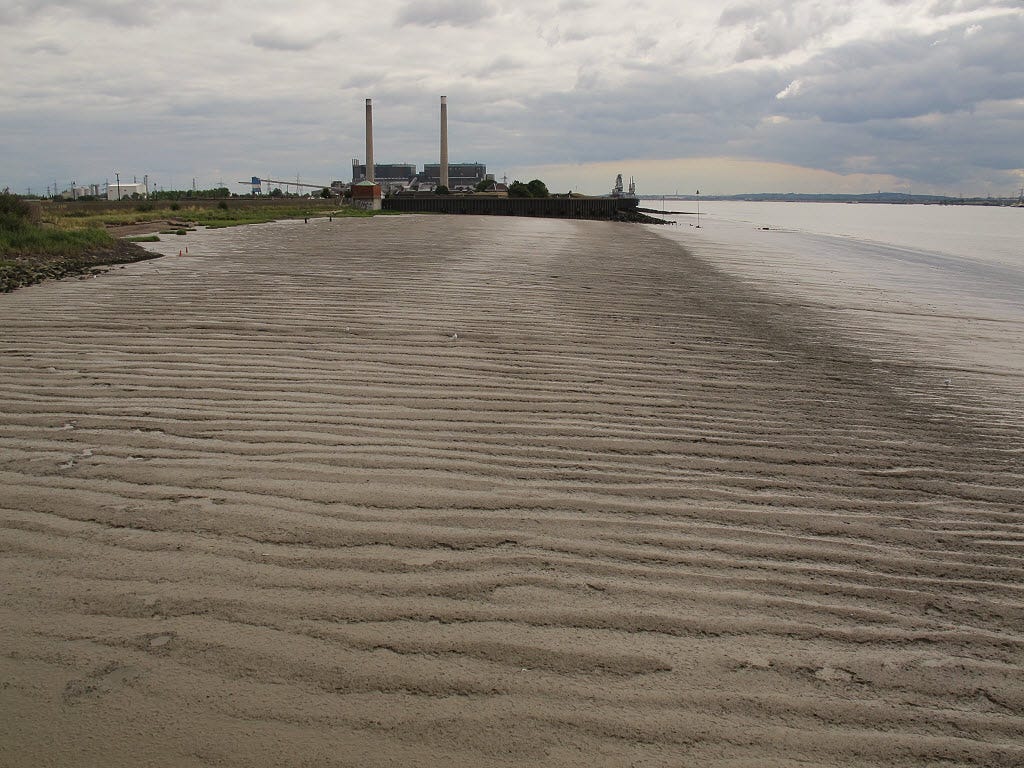
After the Bay of Biscay and the Atlantic had brought on a final spasm of sea-sickness we reached Tilbury, a dismal dock on a dingy lower-mid margin of our Brave New World.
The shore was glistening grey mud with a fringe of black-green bushes and then low, grey sheds. The cold August wind made it uncomfortable to stand on the deck to watch our bumpy mooring. We gathered our cabin-luggage and eased angry Benji from the splintered upper-cupboard into my sister’s oilcloth satchel-bag which immediately began to bulge and throb with his indignant fury. He would never trust us again. We wandered down a gangway trying, but failing, to feel that this was a momentous and joyful moment and found a vast, cold shed in which our hold-luggage had been stacked. We recognised hessian-covered stacks of ugly chairs and battered little tables for the junk that they had always been and knew that they were completely useless and had no power to encourage us to believe that our new lives would simply prolong familiar contentment or to reassure us that we were, somehow, still connected to a solid past and to an optimistic future by memories of all of the durable happiness that we had known.
I couldn't resist: https://en.wikipedia.org/wiki/Patrick_Rabbitt#External_links