
31. A Dad end

A decade passed. I enjoyed my job in Cambridge and was unenthusiastic, and surprised, to be offered a lectureship at Oxford. My then-boss would offer only brief contracts with no security so I knew that I must leave. Until I could negotiate moving my family he generously allowed me to continue work in Cambridge - except on Wednesdays, when I travelled to Oxford to give undergraduate tutorials.
Memories of a very long life can cluster without any connections other than time-sequence. Contacts with my parents became rare and unsuccessful, partly because they lived so far away, but mainly because they and my wife disliked each other very much. However we were able to introduce them to three wonderful grandchildren who have aged into the kindest, smartest and dearest adults I can imagine.
I suddenly heard that Mum had a stroke and had been taken to hospital. This left Dad, now 75, to manage alone as best he could. I tried to help by driving, weekly, from Cambridge to Rochester on my way to Oxford, but Dad was so desolate that we could not communicate even as poorly as we used. I drove him to visit Mum in St Bart’s hospital. Her small body hardly raised the bedclothes. She was as grey and still as the many corpses that I had once wheeled about much older and shabbier All Saints’. She said that she felt “like a seagull, clinging to a cliff in a storm”. My father could not find anything to say to either of us and I began to realise how bereft and helpless he was so I took him home and tried to help in ways that he did not think he needed, or wanted, such as organising attention from Social Services, arranging Meals on Wheels and alerting neighbours and police to watch out for him. Of course, I also offered incoherent sympathy, but he knew that I would not give what he desperately needed: support in a family that felt obligations to him, even if they were as uneasy in his company as he was in theirs.
I continued futile weekly visits although we never mentioned the total care he desperately craved. We both knew that my refusal contrasted bitterly with his life-long support of his own parents - but he never mentioned this. The most he did to illustrate his anxieties was to report fragments of information he picked up in meetings with other frail elderly that the Social Services arranged for him to meet. These seemed to be hard-case geriatrics eager to shock and demoralise him - one old man claimed that a persistent problem in Council Sheltered Accommodation is that malevolent strangers sneak into your room to piss on your bed.
After weeks I discovered that Dad would often empty much of the meals-on-wheels the Social Services delivered down the outside drain. He lost weight. Sometimes he did better by standing in the road outside his house until a neighbour asked him whether he was “all right” and tried to cheer him by cooking him curry that he liked. To me, who did not even cook him decent curries, he would shout “Why do you come?” meaning, of course, “What are you actually doing for me?“ I could only say, to hurt him back, that I was surprised that he had never once visited Mum since I took him to the hospital and that my inadequate efforts were “for Mum’s sake”. He raged that he felt too weak to get to the hospital and I stupidly sneered that it was on an easy door-to-door bus route. He shouted that he had become unable to communicate with me “since I had begun to crow” and, lurched into a fury and chased me round the kitchen table trying to hit me. He had become easy to dodge.
Mum became well enough to be discharged by the hospital. This forced the hard question as to how she could be cared for. Dad had optimistically brought her bed down steep narrow stairs to the front room. This must have been very hard work but was useless because she needed a level of care he could not possibly manage. Her lifelong friends, the sisters Aileen and Blanche Bell, now lived in Crawley in Sussex and, with remarkable generosity, they volunteered to look after her until she was better. This was a huge and instant relief for me and I hoped also for Dad. Seizing sudden new hope he hired a taxi to go from Rochester to Crawley to visit her and to plead, desperately, with the Bells to take him on as well. They refused. He taxied back in even greater anger and despair.
During the next few weeks Dad grew increasingly demoralised until I was told that he had been found, paralysed by a stroke, lying on the floor by his living room chair. He had been taken to All Saints’ hospital where I had portered many years ago. I found him, grey-faced, incoherently agitated and helpless, over-filling a railed cot. He recognised me but could only manage furious blurting to convey rage and contempt.
There is no useful plan to communicate with someone who is enraged and disgusted with you and can only express his feelings by incoherent roaring. I was relieved when he seemed to fall asleep but then I could only sit by him with nothing to say except stupidly to ask whether there was anything I could get, or do, for him, and to tell him that he would soon be better. He could never coherently answer. All the nurses were very kind and efficient, but had also mastered evasion of impossible questions. I used to sit by him silently thinking about whatever I could until it was time to drive on to Oxford to do my bits of teaching.
I came back a week later and found Dad in a different, lower-grade ward that I recognised as being as being the one with the spiral staircase on which I had my first close encounter with a corpse. I am not sure that he knew me during his brief wakes. I sat silent because I could not think of anything to say, or to do. I realised that I should try to ease at least one of us by protesting concern, admiration and affection but did not competently manage any of this. There were no cubicle curtains so I watched nurses bustling around other bed-ridden old men. Most patients were twitchingly comatose but one, suddenly rousing, reached for a bed-side table on which a flask of his urine had been left and, with relief, drank deeply from it. Two nurses saw this and coped with grimacing laughter. I had no-one to talk to and nothing sensible to ask or to do. So, after what seemed a tactful time I went on to Oxford to teach.
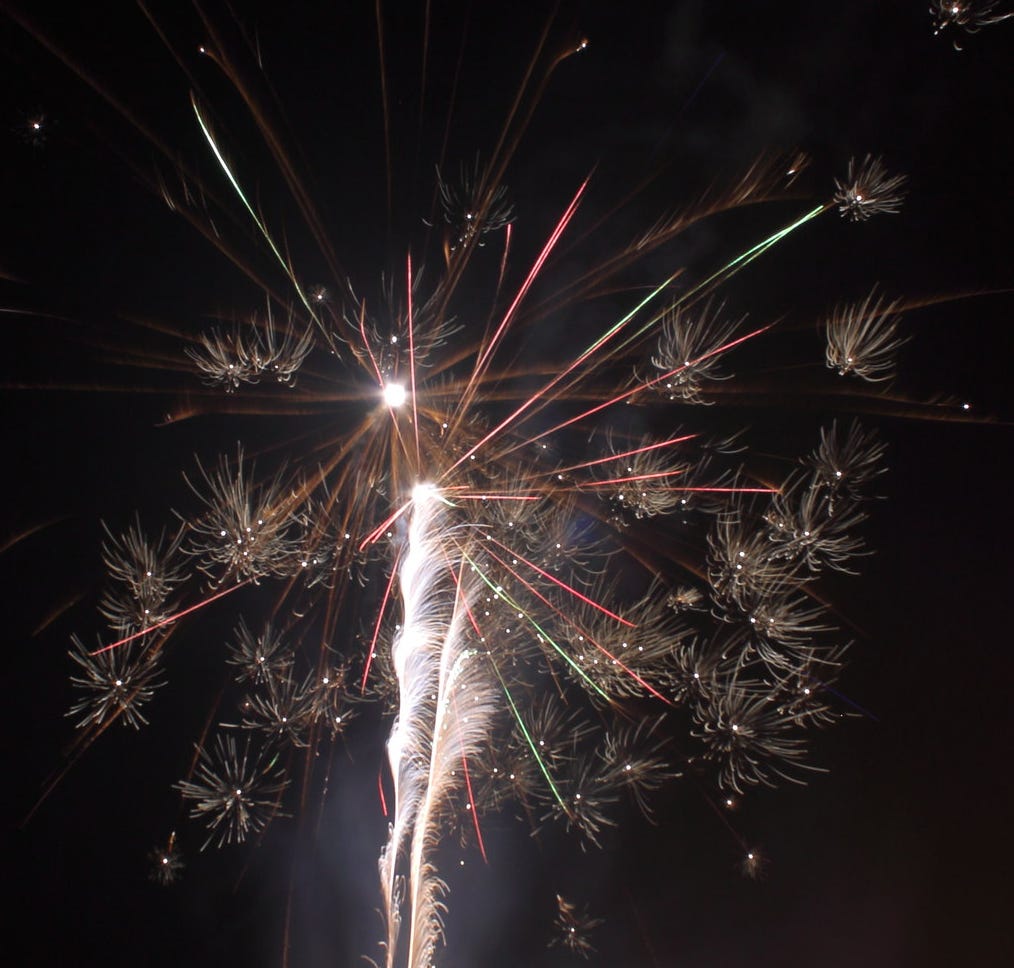
Awareness of Dad’s desolation made me ring often from my Cambridge home to pester patient nurses to tell me, yet again, that nothing had changed. I rang on Guy Fawkes Night and a kind nurse again repeated that all remained the same. When I persisted with desperate questions she said “Then come”. So I drove through dark streets smelling of gun-powder from celebratory fireworks that banged and flashed in little back gardens and lit by puny pocket-money-rockets bursting low into orange embers. The trip seemed longer than usual and I found my father’s hospital ward, and his body laid out on a curtained bed. The nurses had washed and cleaned him but could not get his false teeth in properly so they stuck out through his lips like an uncomical beak. I held his chest. It was still as huge as while he used to hug my sister and I to tell us that “He would give his right arm for us” but was now cool and hollow as a big, empty suitcase. I touched him as much as I could bear, sat by him and said useless regretful things. Of course I was sad but, as with my first encounters with corpses, I could not find any appropriate or helpful thoughts. I began to worry, as I still uselessly do, because the kind nurse who had answered my phone call from Cambridge had first said that he had not changed at all and then, brusquely and wearily, sighed: “Then come”. I still uselessly fear that I may have provoked an expedient final solution involving pillows or morphine but I was shocked by numbness rather than by the catastrophic grief that I felt that I owed. I sat, with an arm over his big, empty, quiet chest, not knowing how long to pause before getting on with the next things in my life.
My bed in Cambridge was a long drive away but my wife’s exceptionally warm and kind sister, Johanna (Joki) lived on a smallholding in Upchurch, a nearby village. I knew that she would be alone because her gentle and humorous husband, Sid, had been disabled while walking to work by a pensioner incompetently riding a bike through a rainy dawn. The pensioner was too poor to offer any amends but British Rail had continued Sid as a permanent night station-porter.
So I drove to Upchurch. Wonderful Joki provided sympathy and tea and put me to bed in a spare room. I instantly fell asleep until I was awakened by the arrival, at her front door, of her neighbour Ken who had a ramshackle chicken farm next to her property. Love had burgeoned during collaborative tending of rows of broad beans and Ken had become a regular night-visitor. I woke slightly, could not make out what they were saying but tones of concern and compassion made it easy to get back to sleep.
Mum was still with the Bell sisters in Crawley so I had to drive to tell her that Dad had died. I found their little house and was intercepted, on the pavement, by both, very hostile, women. They had taken a dim view of me since I was an infant and this dislike was now justified, and intensified by my failure to effectively help Mum and Dad and they wanted to get rid of me as fast as possible. They would not let me see Mum to give her my news so I only heard her shriek, indoors, “He’s come to tell me that Jack has gone” as they managed to shoo me off.
My wife was extraordinarily kind and efficient and, with help from excellent Joki, cleared my parents’ council house. I was relieved because I did not want to re-encounter objects that I had known all my life and that would trigger memories of bits of the past that I had shared with my parents. I was relieved that all reminders disappeared into a shed in Joki’s back garden.
I returned to Rochester to arrange a funeral that preceded a cremation because a formal Roman Catholic burial would have cost much more. The service was in a small, and relatively cheap Catholic church managed by a Priest hired by the undertakers. The Priest had not known my father or any of my family so, after he had rapidly got through the service, he had nothing to say to the congregation of three – my wife, my tiny daughter Helen and myself. To fill an uncomfortable silence the Boss Undertaker asked me if I wanted to say anything about my Dad. I could find nothing. They wheeled his body away. I did not want to disown him or to belittle him by silence, or to disparage his life or our relationship. I did not even have the excuse of being tongue-tied. In my profession I had a reputation for public glibness. It was just that I had not thought that anything might be required of me and, when the unexpected question was suddenly put, I once again failed to do what he deserved. I sadly remembered that his ultimate reason for sticking with the Roman religion was to know that there would be somebody to bury him.
This issue of orthodox Catholic Committal was the main point of a furious letter from his brother, my Uncle Mick, now a GP in Pevensey who, rightly, upbraided me for not continuously keeping him informed about my father’s illness, particularly for not telling him the day and time of the funeral and, worst of all, for arranging a cremation instead of the internment that he believed obligatory for all dead Catholics. Defensive anger at being blamed made me reply that the Roman ban of cremations had recently been repealed and that, although Mick had known of my father’s stroke he had never contacted me, asked for details or visited him. I realised that Mick was very busy with his medical practice and I had felt entitled to assume disinterest. This was unkind and unfair. Mick was certainly very upset but must have felt that visiting a moribund and uncommunicating patient would be futile and painful and, perhaps, he also felt that a difficult visit would achieve nothing and might involve unforeseeable commitments. He needed, and deserved apologies, empathy and consolation not my defensive anger.
I hope you got the hugs you needed after writing such a candid and compelling account.